


*changes may apply

Program Format
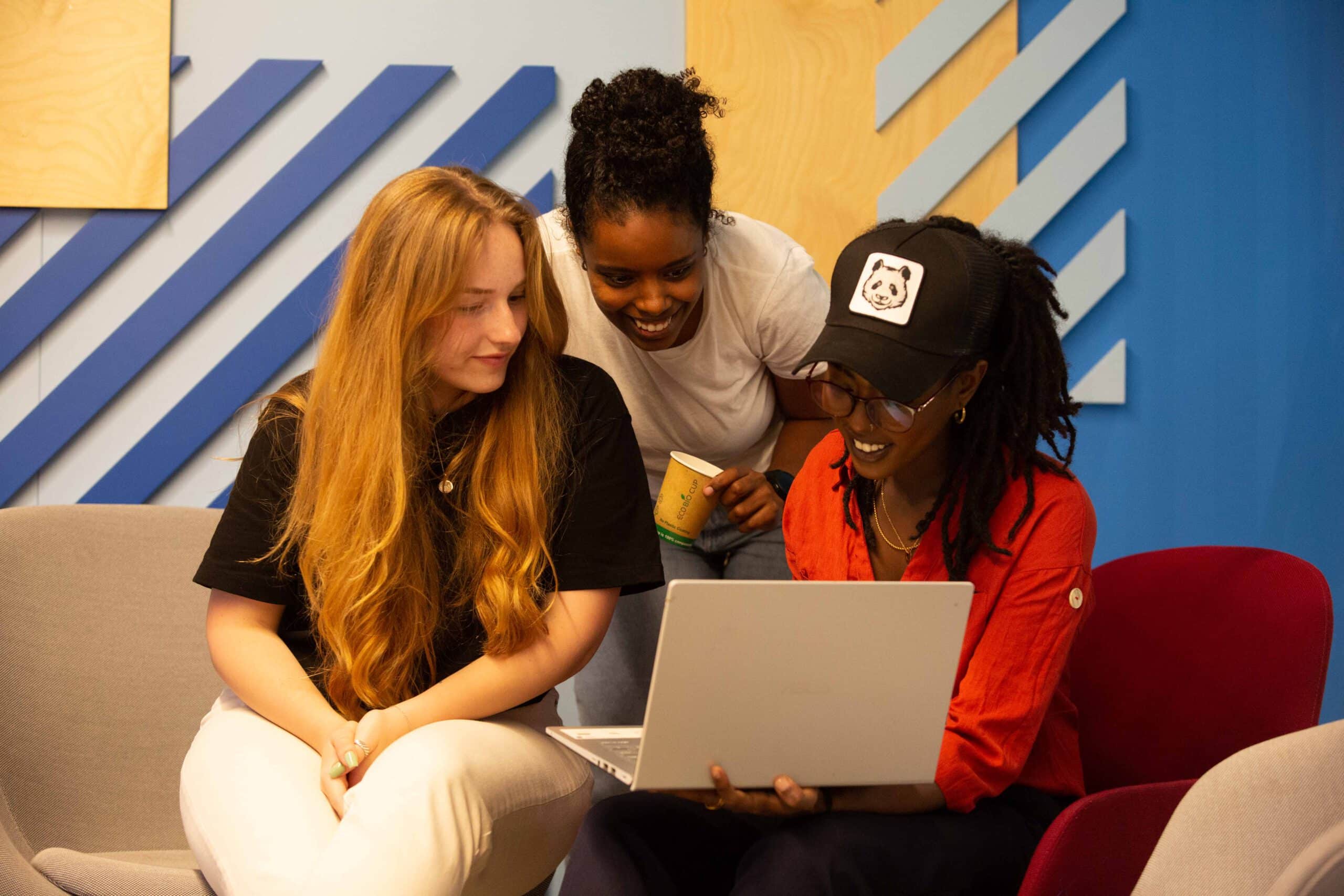
- 12 weeks, each week includes: One class session split between lectures & mentoring.
Independent team work practice.
- Structured contact hours: 10 hours per week over 12 weeks (~120 hours total) — ~5 hours of lectures & mentoring and ~5 hours of team studio.
- Self-paced practice and tool set-up: ongoing individual work with Base44, Claude Code, Claude Design, Git. and more between sessions.
- Client product build: integrated into the weekly studio; Drop 1 delivered in week 6, client review in week 9, final delivery and handoff in week 11.
- Career readiness: week 12 is dedicated to interview prep, demo & storytelling, and portfolio work
Overview: Why this Program Exists
The way products get built has changed. Teams no longer treat AI as an add-on , they lean on AI-native workflows to synthesize user research, generate product concepts, prototype interactive products, define metrics, run evals, and set guardrails before anything ships. Recent graduates who hold solid theory but no shipped work struggle to make that leap into a first role.
Rather than teach a catalogue of tools, this practicum has each team ship a single product end-to-end for a real client. Participants uncover the real need, scope requirements, make build-versus-cut decisions, and build a working product, combining fast AI-assisted building with deliberate, hands-on engineering. Because AI products are probabilistic hard to test, costly to scale, and exposed to risks like runaway loops, data exposure, and alignment failures, the program treats production as a first-class concern rather than an afterthought. It closes the missing piece in a graduate’s portfolio: the specification, development, and delivery of a product to a real-world client.
Six modules, one real product
Module 1: weeks 1-2
Discovery & Product Definition
› Working with a real client: running the first
discovery call and uncovering the real need.
› Scoping & prioritization: user needs, build-vs-
cut decisions, and defining an MVP.
› AI-native PRD: writing a product definition and
requirements with AI in the loop.
› UX foundations: mapping the user journey and
starting design.
Module 2: weeks 3-6
Building on Base44
› Technical foundations & dev in the AI era: the
Base44 builder, data model, and app structure.
› Product data & analytics: instrumenting the
product and reading signal.
› Git / GitHub: version control, branching, and a
clean commit history.
› Toward Drop 1: a first working slice presented to
the client in
week 6.
Module 3: weeks 7-8
Base44 Advanced & AI Security
› Advanced Base44 patterns: custom workflows,
automations, and business logic beyond CRUD.
› Applying Drop 1 feedback: re-prioritizing the
backlog for the final sprint.
› AI security & privacy: data handling, guardrails,
and safe defaults for AI features.
› Predictable AI behavior: making AI-driven
features safe in a live product.

Module 4: weeks 9-10
Client Review & Production Hardening
› Client review: presenting progress and folding a
second round of feedback into the build.
› Scale & reliability: designing for real usage
rather than “runs on my machine”.
› Security & data protection in a live environment.
› QA & testing: catching failure modes before the
client does.

Module 5: week 11
Final Delivery & Handoff
› Orderly handoff: documentation, training, and
access for the client.
› Maintainability: making the product stand on its
own after the team leaves.
› Team retrospective: what shipped, what was
learned.
› Final panel: presenting and defending the
product to a professional panel.
Module 6: week 12
Career Readiness & Soft Skills
› Interview prep: technical and behavioral
interviews, mock rounds.
› Demo & storytelling: presenting your product
and telling the build story.
› Personal brand: LinkedIn, résumé, and a
portfolio built on real work.
› Retrospective: what you shipped, what you
learned, where you go next.